
A lead calls after seeing your ad, reading your reviews, or getting referred by a customer. That caller is already doing the hard part. They're raising a hand and asking for help.
Then the business fumbles it. The phone tree is confusing. The caller sits in a generic queue. A receptionist sends them to the wrong team. The agent who finally answers has no context and asks the same questions again. In insurance, legal intake, home services, medical sales, and credit repair, that isn't a small service issue. It's a lost revenue event.
That's why call routing software deserves a very different conversation than it usually gets. Organizations often still evaluate it like a back-office efficiency tool. They ask whether it reduces hold time, lowers transfer volume, or makes staffing easier. Those questions matter, but they're incomplete. The bigger question is simpler: does your routing logic help the right calls reach the right people fast enough to turn intent into booked appointments, qualified opportunities, and closed business?
The teams that get this right stop treating inbound calls like traffic to manage. They treat them like demand to capture.
Why Every Inbound Call Is a Moment of Truth
Inbound phone calls are often the highest-intent interactions in the funnel. Someone who calls usually wants an answer now, not later. If your system slows that moment down, you don't just create friction. You give the caller a reason to contact the next provider.
The pressure on operations teams is real. Contact centers commonly aim to answer 80% of calls within 20 seconds, 77% of customers expect to reach someone right away, the average call center handles roughly 4,400 calls per month, and 61% of leaders report higher call volume since 2020, according to Sprinklr's call routing overview. That mix of high expectations and rising volume is exactly why manual call handling breaks down.
What a missed call actually costs
The damage usually doesn't show up as a line item labeled “bad routing.” It shows up elsewhere:
- Sales misses because new inquiries hit a support queue instead of a closer.
- Lower booking rates because callers abandon before speaking to anyone useful.
- Slower intake because staff spend time transferring and re-qualifying people.
- Brand erosion because callers remember the hassle more than the offer.
A lot of businesses still think the fix is “answer more calls.” That helps, but it isn't enough. If the wrong person answers, you still lose time, confidence, and momentum.
Practical rule: Speed matters, but relevance matters more. The fastest wrong answer still sends the caller backward.
Why call routing software matters now
Good call routing software acts like an operational filter between demand and chaos. It decides where each call should go based on what the caller needs, who's available, which agent has the right skills, and what the business wants to prioritize.
That last part matters. Routing is never neutral. Every rule you set reflects a business priority. You can prioritize new leads, existing customers, urgent cases, certain territories, regulated inquiries, or high-value accounts. If you don't define those priorities deliberately, the phone system creates them accidentally.
For revenue-focused teams, that's the shift. Call routing software isn't just there to reduce labor friction. It's there to protect intent at the moment it appears.
How Modern Call Routing Intelligently Directs Traffic
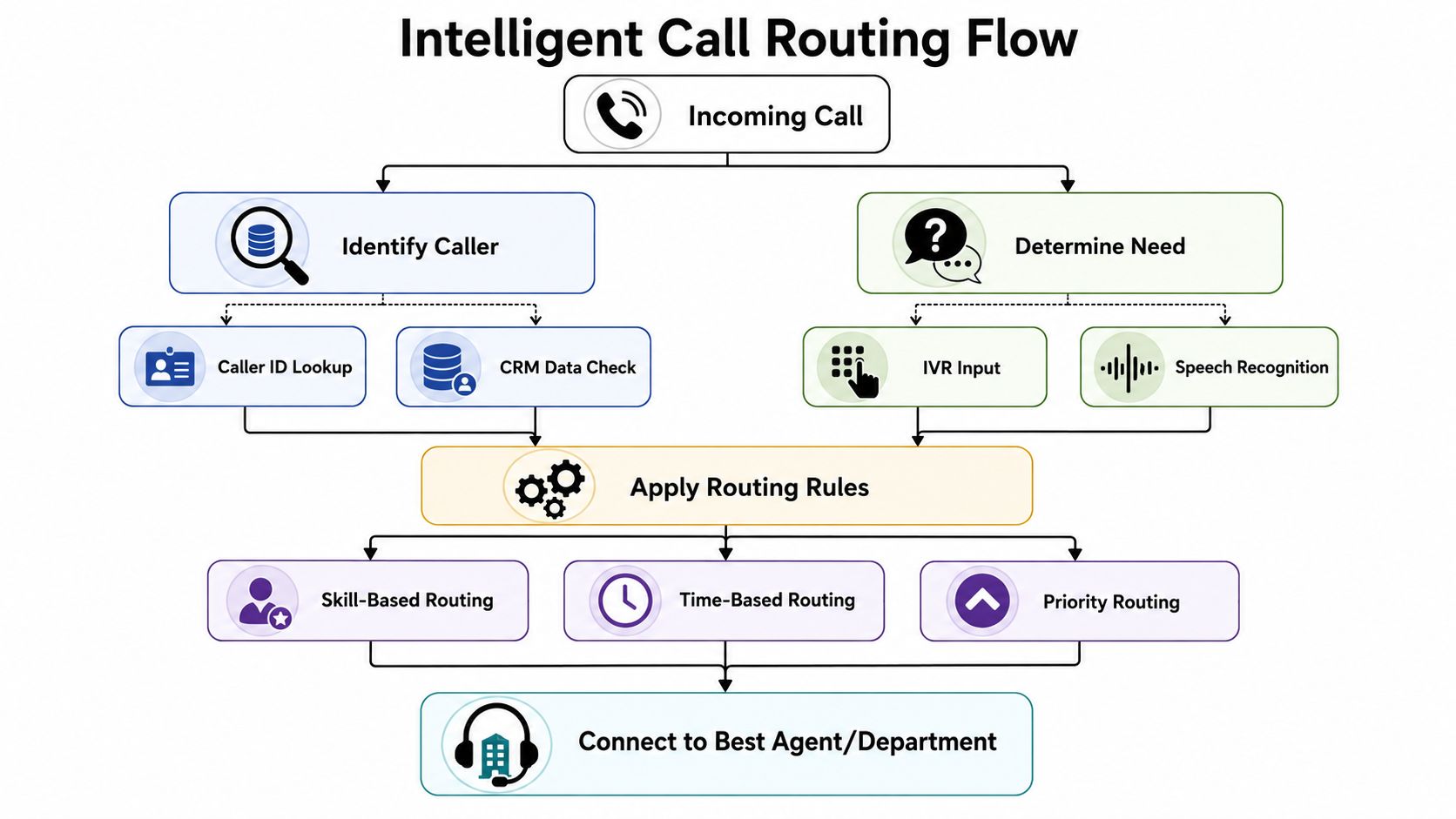
Modern call routing software is a combination of IVR and ACD. IVR, or Interactive Voice Response, collects information about what the caller wants. ACD, or Automatic Call Distribution, uses that information to send the call where it should go. Together, they route based on factors like agent skills, call volume, time of day, caller priority, and CRM data, as described in RingCentral's call routing guide.
The core mechanics in plain English
A useful way to think about it is as a digital front desk with rules.
First, the system identifies intent. That may come from keypad choices, caller ID, a CRM lookup, or spoken input. Then it checks the routing logic. That logic might ask whether the caller is a prospect or existing customer, whether the issue needs a licensed or trained agent, whether the best team is online, or whether another queue should take overflow.
Finally, the platform places the call with the best available destination. That may be a person, a team queue, voicemail, or callback flow.
A basic setup uses simple rules. A better setup layers them.
Common routing models and where they fit
Some strategies are straightforward and still useful:
- Round-robin routing works for general inquiry teams where calls are similar and workload balance matters most.
- Time-based routing is important when coverage changes by shift, office, or geography.
- Priority routing helps when certain callers should bypass the general queue.
- Skills-based routing is the workhorse for teams handling different products, compliance requirements, or service lines.
The strongest systems combine these rather than choosing one. For example, a legal intake team might first identify practice area, then check who is trained for that case type, then apply business-hours logic, then use overflow rules if nobody is available.
That same logic increasingly connects to digital qualification workflows. If you're thinking beyond the phone queue, this piece on AI SDR for instant lead qualification is useful because it shows how qualification and routing can work together across channels rather than living in separate tools.
Where AI routing helps and where it needs limits
AI-based routing changes the old model because callers can often say what they need instead of navigating rigid menus. Recent guidance on AI IVR and natural-language routing highlights the upside, but it also raises the important issue of human oversight and fallback logic in insurance, legal intake, and healthcare, where a wrong transfer can create compliance exposure.
That trade-off is the core conversation.
AI routing is strongest when call intent is broad, repetitive, and easy to classify. It's riskier when a single wrong branch changes who can legally speak, what disclosures must happen, or how sensitive information is handled.
In regulated environments, every AI decision needs a safe failure path.
That usually means building guardrails such as:
- Defined fallback paths so uncertain classifications go to trained humans.
- Restricted automation zones for inquiries involving protected or regulated topics.
- Ongoing review of misroutes, not blind trust in the model.
- Simple escape options so callers can reach a person without fighting the system.
The mistake isn't using AI. The mistake is treating it like a set-and-forget shortcut.
Critical Features and Integrations to Look For
The right routing platform does more than move calls faster. It decides whether high-intent buyers reach the right person while they are still ready to talk.
That is why feature selection should start with revenue impact and risk control, not a longer checklist.
Start with CRM and caller context
Start with real CRM integration. Routing decisions are far better when the system can identify who is calling, what stage they are in, and who should own the conversation before the agent picks up.
That context affects both speed and conversion. A returning prospect with an open quote should not land in a general queue. A high-value client with an unresolved issue should not repeat their story to three different people. In insurance, legal intake, and medical sales, caller context also helps control who is allowed to handle the conversation and what follow-up steps need documentation.
Look for systems that can use data such as:
- Caller identity from phone number recognition
- Account or lead status from the CRM
- Assigned owner or territory
- Recent activity such as form submissions, prior calls, or open cases
If you're also evaluating the surrounding voice stack, teams often review broader managed IT services to make sure routing, telephony, and support infrastructure do not turn into separate operational problems.
Analytics should improve routing rules
Good reporting should help a supervisor change behavior during the day, not just review yesterday's misses.
Advanced routing systems work best when routing rules, queue data, and outcome data stay connected. Analytics should show where qualified calls are getting delayed, which transfer paths break momentum, and which branches lead to booked consultations, signed cases, or policy discussions. Nextiva's guide to call routing software makes the operational case for this kind of visibility. The commercial case is just as important.
A useful dashboard should answer questions like these:
| What you need to know | Why it matters |
|---|---|
| Which queues are backing up | You can catch staffing or rule problems before lead response slips |
| Which agents receive transfers most often | You may have skill gaps, weak intake criteria, or poor call matching |
| Which call types stall after hours | You may need overflow coverage, callbacks, or tighter scheduling rules |
| Which routing branches produce better outcomes | You can shift more demand toward paths that support revenue |
Operational advice: If reporting stops at handle time, you will miss the revenue leaks hiding inside transfer patterns and missed follow-up.
A short product walkthrough can help teams visualize what modern queue and routing controls look like in practice:
Configurability matters more than feature volume
I have seen teams buy platforms loaded with AI labels and integration claims, then struggle to make one safe routing change before a holiday weekend. Fancy features do not help if operations managers cannot update schedules, overflow rules, or priority paths without waiting on a specialist.
The better test is simple. Can your team change routing logic quickly, document why the change was made, and roll it back if conversions drop or compliance risk rises?
Check for:
- Visual flow builders that non-technical managers can edit
- Business-hours logic that handles holidays and coverage changes
- Overflow and specialist-unavailable paths
- Calendar and scheduling integrations for booking-based teams
- Helpdesk or ticketing integrations for service-heavy environments
- Permission controls and audit trails for regulated teams that need accountability
For AI routing, ask one more question. What happens when the model is unsure? In regulated sales environments, the answer cannot be “let the AI guess.” You want confidence thresholds, human fallback paths, and restricted workflows for sensitive topics.
Before deployment, map the full call flow end to end, including peak periods, after-hours handling, specialist unavailability, and compliance exceptions. If a vendor cannot support that level of planning, the platform will struggle when call routing starts carrying revenue responsibility instead of just cutting queue time.
Measuring Success Beyond Lower Wait Times
A prospect calls ready to book, buy, or schedule. They get sent to the wrong queue, transferred twice, and hang up before anyone qualified speaks with them. Operations teams often record that as a service problem. Revenue teams feel it as missed pipeline.
That is why lower wait time is an incomplete success metric for call routing software.
Hold time, queue time, and abandonment still matter. They show whether the front door is functioning. But leadership is usually asking a different question. Did routing help the business capture more high-intent conversations, convert more of them, and protect revenue that was already trying to come in?
That gap shows up often in the market. Buyers want to know whether routing improves revenue, not just efficiency. Existing guidance tends to explain how routing works, but rarely gives teams a usable way to measure conversion, appointment-setting, or downstream business impact, as discussed in ClickPoint Software's perspective on call routing software.
The right scorecard
Use a scorecard tied to outcomes your finance and revenue leaders already trust.
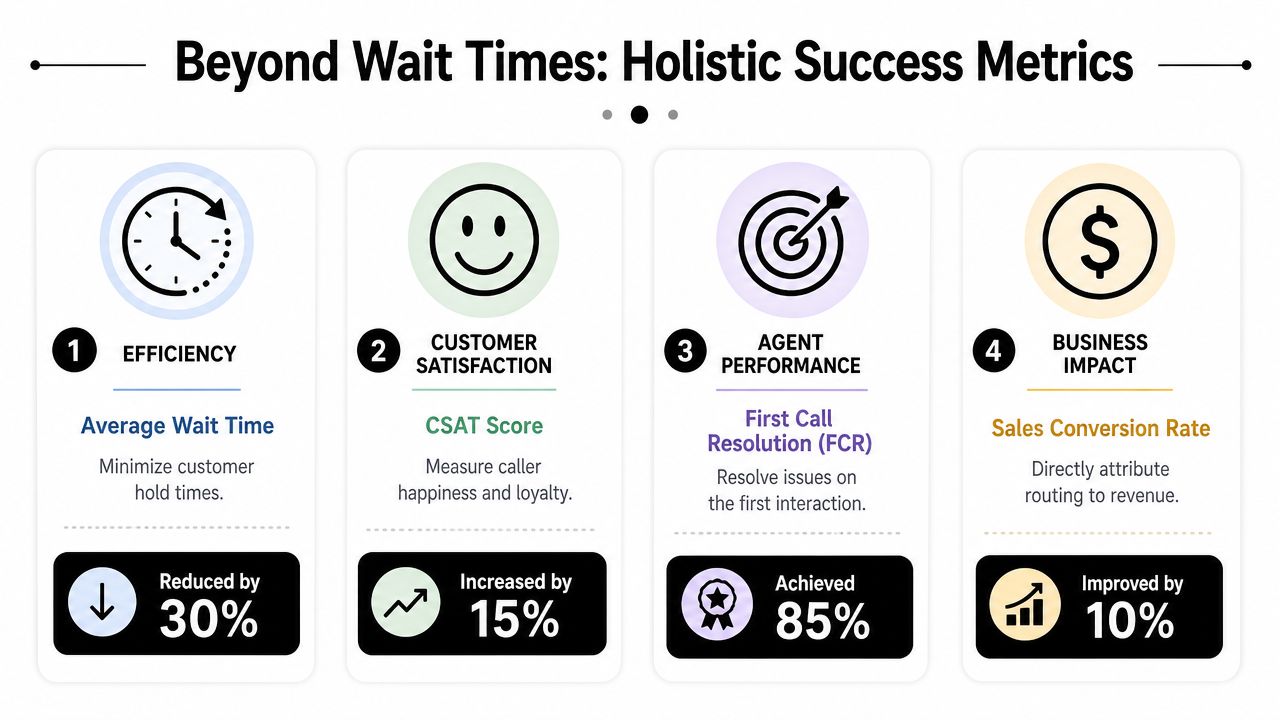
At a minimum, track four layers:
- Efficiency metrics such as wait time and handling time
- Quality metrics such as first-call resolution and transfer frequency
- Commercial metrics such as booked appointments, qualified intakes, or sales conversions from inbound calls
- Segment metrics split by campaign, location, product line, and call type
Keep the scorecard simple enough to use. If a team cannot tell which routing path produces qualified meetings versus wasted talk time, the dashboard is too broad to guide decisions.
The operational gains that support revenue
Routing affects revenue through the steps that happen before a sale is recorded. Shorter waits reduce lead abandonment. Fewer transfers preserve trust. Better first-call resolution keeps intent alive long enough for the right person to move the conversation forward.
In practice, that means the routing path matters as much as agent performance. A strong closer cannot recover every call that arrives late, cold, or misdirected.
This is also where regulated industries need a stricter lens. In insurance, legal intake, and medical sales, a fast handoff is only useful if it is also compliant. AI-based routing can improve speed and match quality, but teams should measure whether those decisions create bad transfers, licensing issues, privacy exposure, or sensitive conversations routed outside approved workflows. Revenue gains disappear fast when compliance failures create rework, complaints, or legal risk.
Build an ROI model your leadership team will believe
Do not pitch routing software as better call handling. Build a model around your funnel.
For a home services company, measure calls that become booked jobs. For legal intake, measure consults scheduled and retained-case rate. For insurance, measure qualified policy conversations and bind rate by routing path. For medical sales, measure calls that progress to compliant rep follow-up or demo scheduling.
Use a simple framework:
| Revenue question | What to measure |
|---|---|
| Are callers reaching the right team first | First-call resolution and transfer patterns |
| Are high-intent inquiries getting handled quickly | Queue placement for sales or intake calls |
| Is routing improving conversion quality | Appointment or consult rate by routing path |
| Are some call types worth special treatment | Outcome rate by campaign, source, or intent |
One more step makes the model credible. Compare outcomes before and after routing changes for the same call segments, not the whole phone channel at once. That controls for seasonality, staffing shifts, and campaign mix. It also helps isolate whether the routing logic improved revenue or just moved calls around.
Ask whether routing protected intent and produced more qualified outcomes. That is the version of ROI that gets budget approved.
Call Routing Strategies Tailored to Your Industry
A generic queue structure creates generic outcomes. High-performing teams design call routing software around how revenue enters the business.
Insurance and brokerages
A Medicare, ACA, or auto insurance office usually has at least three very different inbound moments. A new shopper wants a quote. An existing policyholder needs service. A claim-related caller may be anxious and urgent.
If all three enter the same front door and wait in the same line, your sales staff lose focus and your service staff inherit conversations they can't close.
A better design separates intent early. New quote requests route to licensed or top-converting sales agents. Existing customers route by policy type or account ownership. Claims and service questions go to the service team with the right scripts and documentation process. If the platform can identify returning policyholders through CRM data, that routing becomes even cleaner.
The gain isn't just speed. It's protecting your closers from low-fit traffic while making sure service calls don't bounce around.
Home services and field appointment teams
For HVAC, plumbing, roofing, electrical, and restoration companies, phone routing often breaks at the dispatch layer. The caller may need emergency service, an estimate, or a simple scheduling update. Those calls should not compete equally.
Geography usually matters as much as call intent. A strong setup routes by service area, trade type, and urgency. Emergency repair requests may bypass standard booking queues. Estimate requests can go to appointment setters. Existing jobs can route to service coordination.
This kind of structure reduces the back-and-forth that kills booking momentum. It also lets office staff use narrower scripts because they know the caller category before they answer.
Medical device and healthcare-adjacent sales
Medical device teams often blend commercial calls with support, training, and account service. If those come into one queue, sales opportunities get delayed by issues that need a different workflow entirely.
Route prospects and distributor inquiries to commercial reps. Route product support to trained specialists. Route existing account questions based on territory or ownership. In healthcare-adjacent environments, keep escalation paths explicit so a caller with a sensitive or regulated issue can reach the right human fast.
AI needs discipline. Natural-language routing may help classify common inquiries, but high-stakes topics need conservative fallback logic and visible review.
A smart routing design doesn't just send callers somewhere. It protects who should and should not handle the conversation.
Credit repair and financial services
Credit repair and adjacent financial services teams deal with sensitive personal information and trust-sensitive conversations. A weak handoff creates hesitation immediately.
Use routing to separate new lead qualification from account servicing. New inquiries may go to intake specialists who can explain process and gather details. Existing clients should route with account context available. Escalations involving disputes, payment concerns, or compliance-sensitive questions should go to trained staff, not whoever is idle next.
In these environments, consistency matters more than cleverness. Overly complicated IVR trees often hurt more than they help.
Legal intake
Law firms lose business when intake behaves like reception instead of triage.
A personal injury inquiry, family law matter, criminal defense call, and existing client question shouldn't land in the same queue. Practice area should drive the first routing split. After that, route by intake specialist, paralegal team, or attorney availability, depending on how the firm operates.
Urgency matters too. Some legal calls are time-sensitive and emotionally charged. If the caller has to explain the situation twice before reaching someone qualified, trust drops fast.
The best legal routing setups usually keep the front-end simple. One or two clear qualification steps. Then direct access to the right intake path. Anything more complicated tends to lower completion quality.
Your Vendor Evaluation Checklist
Most call routing software demos look polished. That doesn't mean the platform will hold up inside your operation.
Use a checklist that forces the vendor to answer for real-world complexity, not just the happy path shown in a sales presentation.
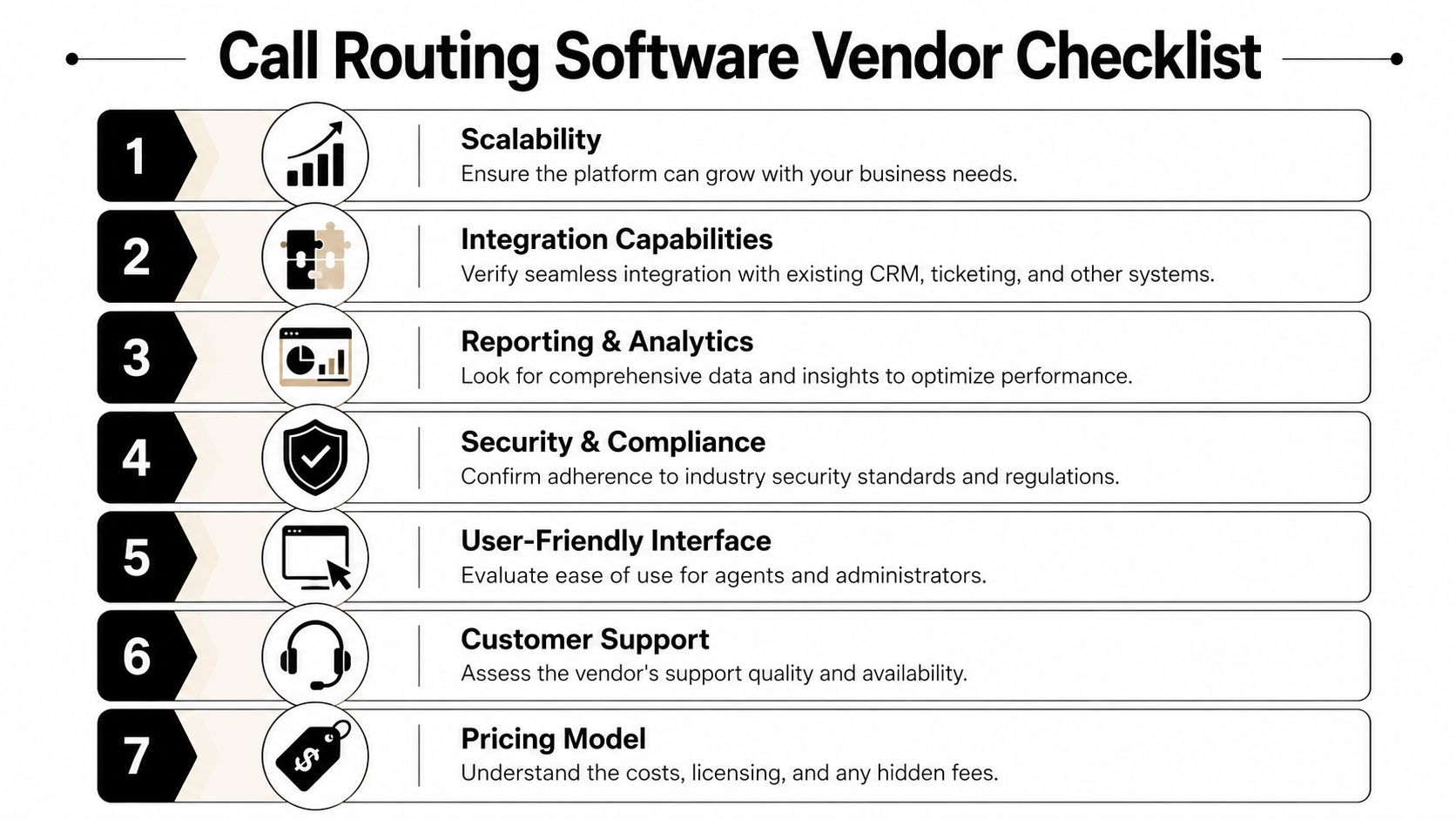
Questions that expose the gaps
Ask these directly during evaluation:
- Can we route using live CRM data rather than static tags or manual lists?
- Can non-technical operators change rules without vendor intervention?
- How do overflow, after-hours, and specialist-unavailable scenarios work in practice?
- What reporting shows business outcomes, not just queue statistics?
- How does AI routing fail safely when the system is uncertain?
- What controls support compliance-sensitive workflows in regulated industries?
- How is implementation handled before go-live, especially call-flow mapping and testing?
A good vendor answers with specifics. A weak vendor answers with feature labels.
What to test, not just ask
Don't stop at Q&A. Ask the vendor to demonstrate your own scenarios.
| Scenario to test | What you're looking for |
|---|---|
| New lead during peak call volume | Does the call still reach the right sales path |
| Existing customer after hours | Is there a clean fallback or callback option |
| Specialist unavailable | Does the system route intelligently or create dead ends |
| Ambiguous caller intent | Can AI or IVR recover without frustrating the caller |
| Compliance-sensitive inquiry | Are there protected paths and human escalation options |
Buying criteria that actually matter
The best choice is usually not the vendor with the longest feature list. It's the one that fits how your team works and how often your routing needs will change.
Prioritize:
- Operational flexibility because your staffing, territories, and priorities will shift.
- Reporting depth because you need proof of business impact.
- Safe AI controls if you operate in insurance, legal, or healthcare-adjacent spaces.
- Implementation support because bad setup can ruin a good platform.
- Usability because a system nobody can update becomes stale quickly.
If a vendor can't show how the platform handles your edge cases, keep looking.
The Future of Intelligent Customer Conversations
The old view of call routing software treated it as plumbing. Useful, necessary, and mostly invisible. That view is outdated.
The better model is revenue orchestration. Routing decides which conversations happen fast, which ones get priority, which agents handle them, and whether intent turns into action or fades in a queue. When those decisions improve, the business doesn't just look more efficient. It captures more opportunities.
AI will keep pushing this forward, especially in intent recognition and dynamic routing. The winners won't be the teams that automate the most. They'll be the teams that combine automation with tight oversight, clean fallback logic, and business metrics that reach beyond hold time.
If the phone is still one of your highest-intent channels, call routing software isn't a support tool. It's part of your growth system.
If your team wants to turn inbound and outbound phone conversations into booked appointments and qualified pipeline without adding headcount, Voicedial.ai is worth a look. It gives businesses AI voice agents for sales and follow-up workflows, with real-time visibility into call outcomes so operators can scale conversations while keeping performance measurable.